Choosing the wrong panel type can cost a facility months of rework, safety non-compliance, and unplanned downtime. Plant engineers and EPC contractors often use the terms Power Control Centre (PCC), Motor Control Centre (MCC), and Panel Distribution Board (PDB) loosely, but each serves a distinct role in an industrial power system. Understanding these differences before you issue a purchase order can save significant cost and prevent operational bottlenecks down the line.
This guide breaks down how industrial electrical panels differ by function, application, and design, so you can specify the right panel for your plant, warehouse, or processing unit with confidence.
What Is a Power Control Centre (PCC)?
A PCC is the primary distribution point in a facility's electrical system. It receives incoming power from the utility transformer or generator and distributes it to downstream panels, including MCCs and sub-distribution boards. A PCC typically houses air circuit breakers, metering equipment, and protection relays that safeguard the entire installation against overload and short-circuit protection failures.
PCCs are sized based on total connected load and are almost always custom-engineered, since every facility's incoming supply, transformer rating, and load profile differ. For chemical plants, food processing units, and manufacturing facilities, the PCC is effectively the electrical heart of the building.
What Is a Motor Control Centre (MCC)?
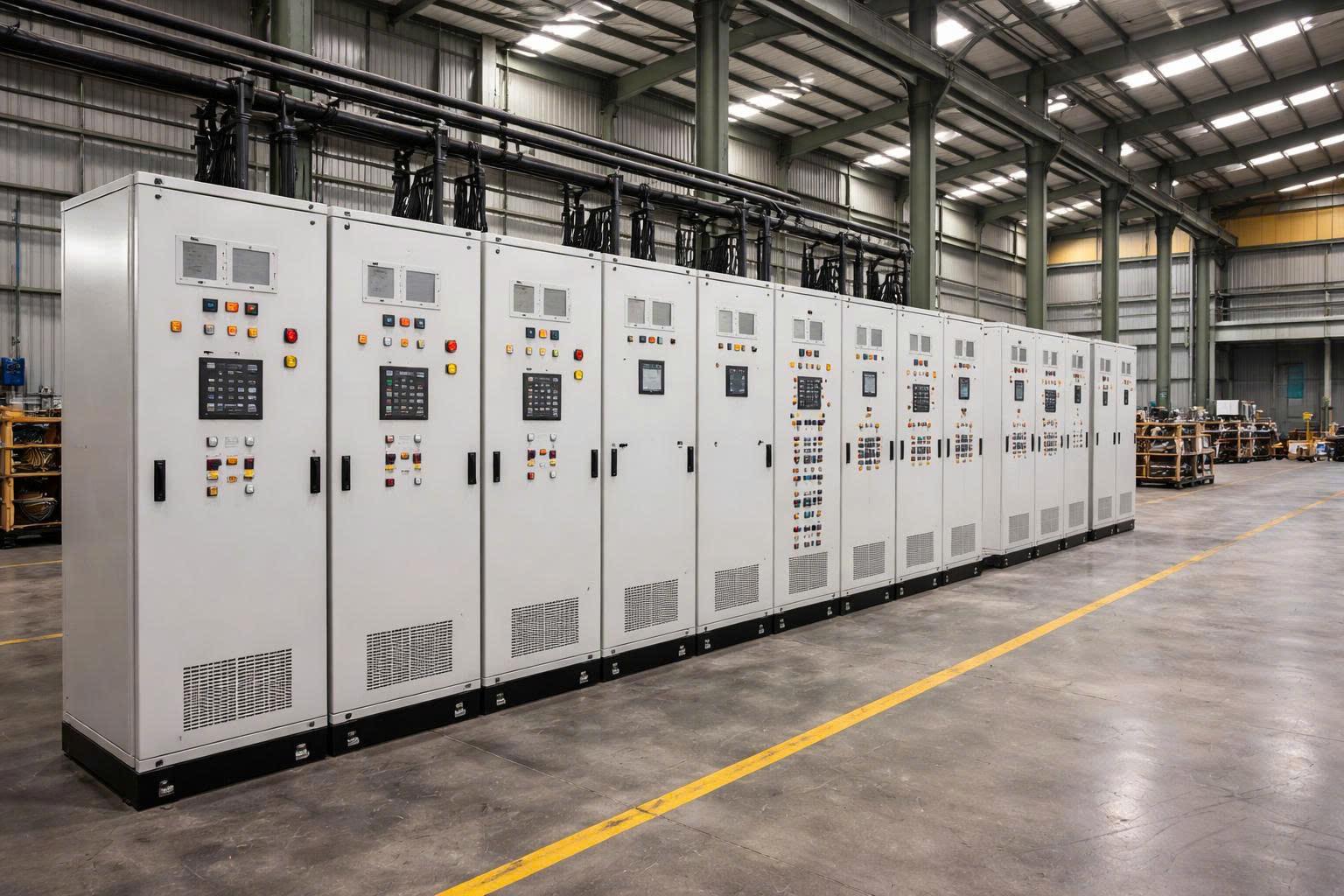
An MCC is a specialised panel dedicated to starting, stopping, and protecting electric motors. Rather than a single large enclosure, an MCC is built from modular compartments, each housing a starter, contactor, overload relay, and isolator for one motor. This modular structure makes it easy to add, remove, or service individual motor circuits without shutting down the entire panel.
MCCs are critical wherever a facility runs multiple pumps, compressors, fans, or conveyors, such as water treatment plants, oil and gas installations, and manufacturing lines. A well-designed MCC also integrates variable frequency drives and PLC-based automation for precise load management, reducing energy waste from motors running at full speed unnecessarily.
What Is a Panel Distribution Board (PDB)?
A PDB, sometimes called a Distribution Board (DB), Sub Main Distribution Board (SMDB), or Local Distribution Board (LDB), sits further downstream in the power hierarchy. Its role is to split incoming power from a PCC or MCC into smaller, individually protected circuits feeding lighting, small machinery, HVAC units, or office loads.
PDBs are generally smaller, use miniature circuit breakers (MCBs) or moulded case circuit breakers (MCCBs), and are selected based on the number and rating of final circuits rather than total plant load. They are essential wherever power needs to reach multiple end points safely and independently.
PCC vs MCC vs PDB: Key Differences at a Glance
- Function: PCC distributes bulk incoming power; MCC controls and protects motors; PDB splits power into final circuits.
- Typical Location: PCC near the main incoming supply; MCC near the motor load centre; PDB near the point of final use.
- Components: PCC uses air circuit breakers and busbars; MCC uses starters and contactors; PDB uses MCBs or MCCBs.
- Customisation Level: PCC and MCC are highly engineered to load profile; PDBs are more standardised and modular.
- Common Industries: PCCs and MCCs dominate chemical, oil and gas, and water treatment; PDBs appear across every facility type, including offices within industrial sites.
How to Choose the Right Panel for Your Facility
Start with a load schedule. List every motor, machine, and lighting circuit the facility will run, along with its rated power and duty cycle. This determines whether you need a full PCC-MCC-PDB hierarchy or a simpler setup with a combined power and control panel.
Next, consider the IP rating your environment demands. Chemical and food processing plants need higher ingress protection against dust and moisture, while indoor manufacturing facilities may need a lower rating. Finally, factor in future expansion. A well-designed PCC or MCC should leave 15 to 20 percent spare capacity for new equipment, avoiding a costly panel replacement within a few years of commissioning.
Why Panel Design Quality Matters
Poorly engineered industrial electrical panels lead to nuisance tripping, overheating, and in worst cases, arc flash incidents. Working with a manufacturer that understands busbar sizing, thermal management, and short-circuit ratings ensures the panel performs reliably under real plant conditions, not just on paper.
HyberMach designs and manufactures PCC, MCC, PDB, SMDB, and LDB panels engineered around each client's actual load profile, using components sourced from globally trusted manufacturers. Whether you are commissioning a new plant or upgrading an existing distribution system, getting the panel hierarchy right from day one protects both your equipment and your uptime.
If you are planning a new facility or evaluating your current electrical distribution setup, our engineering team can review your load requirements and recommend the right combination of panels for your operation.